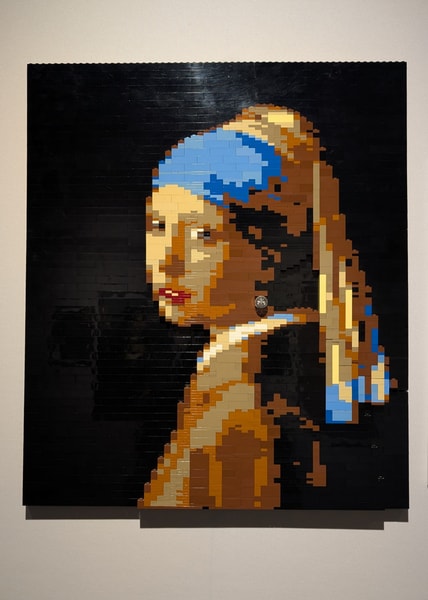
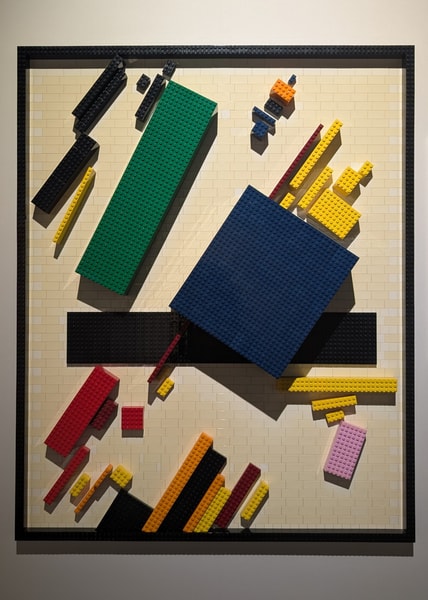
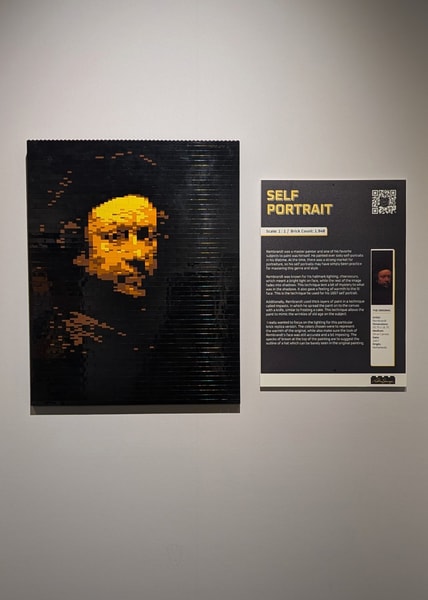
A few weeks ago, I went to The Art of The Brick Exhibit which features works by artist Nathan Sawaya made from LEGO pieces. I was a bit skeptical about whether it would be a waste of money, but it was more enjoyable than I expected. While there were many re-imagined pieces of famous artworks and new sculptural artworks, two of my favourites were Vermeer's Girl with a Pearl Earring and Malevich's Suprematist Composition.
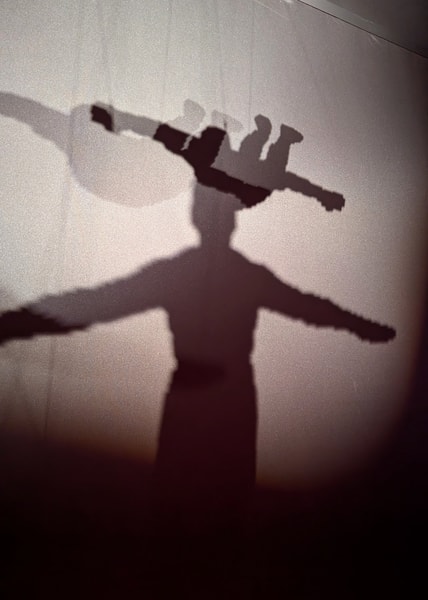
The last photo I included is the shadow from one of the art installations that consisted of figures hanging from the ceiling. I find myself quite drawn to interesting shadows of sculptural art (and plants). Sometimes, they can be just as or more intriguing than the artwork itself.
I also wondered why the camera was able to pick up more of a pixelated image than the eye. When I looked at Rembrandt's Self Portrait, there was barely an impression of a face. But at a distance or through the camera lens, the face was clearly visible. Google says it's because the human eye is an interpreter. It can only see the central area, called the fovea, in high resolution, so it needs to move and scan the area in order to stitch together the image and fill in any gaps. The camera, on the other hand, already has a set of uniform sensors in place to capture the image.