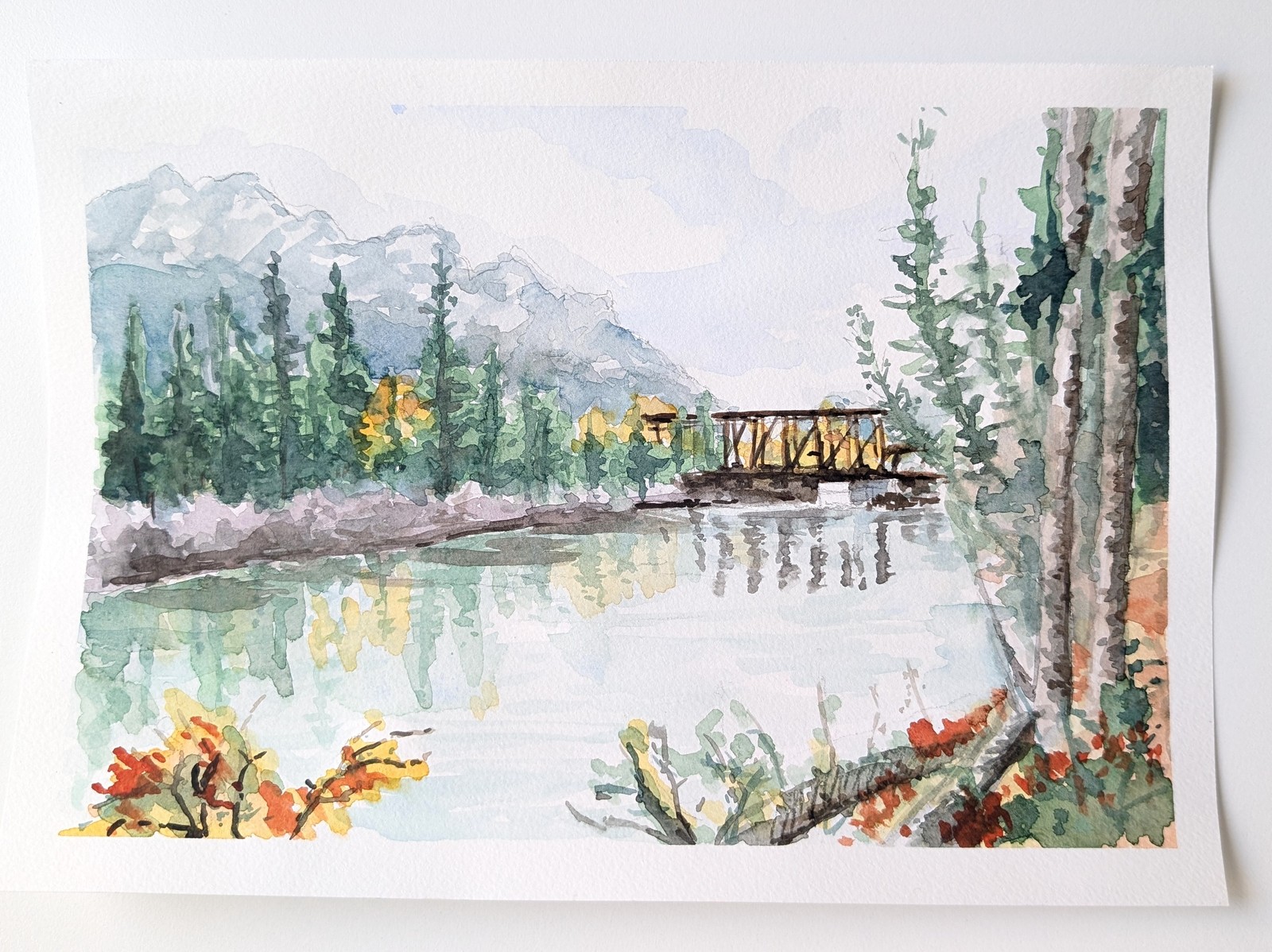
Earlier in the week, I had a bit of a dripping faucet issue, so I used some of the water for a quick watercolour painting. I think my watercolours usually look better in photos than in real life...
Reflections about the liminal space between nature and culture, self and society, humanity and divinity.
© Van Thi Diep, PhD.
Posts tagged with art
Earlier in the week, I had a bit of a dripping faucet issue, so I used some of the water for a quick watercolour painting. I think my watercolours usually look better in photos than in real life...
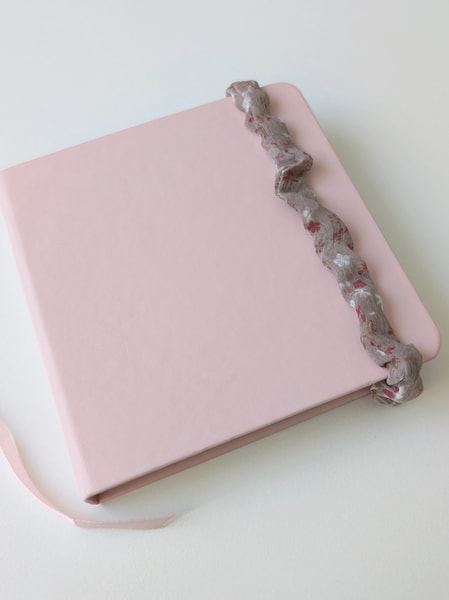
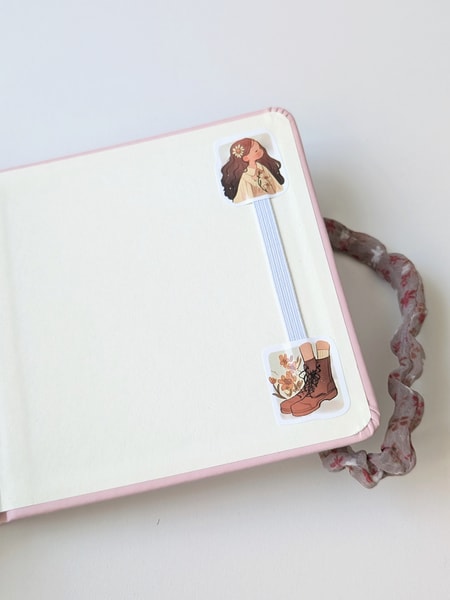
Even though I rarely have the patience to sketch outdoors, the elastic of my Talens sketchbook still managed to get too loose. I was hesitant for a while to cut off the elastic entirely or replace it but I decided to give it a try since I had some thin white elastic at home. But white elastic looked boring with my pink cover. Since I had some leftover matching chiffon fabric, I sewed a scrunchie-like elastic casing for it. Not perfect, but cute.
If anyone is interested in replacing the over-stretched elastic of their sketchbook in a similae way, here's the process:
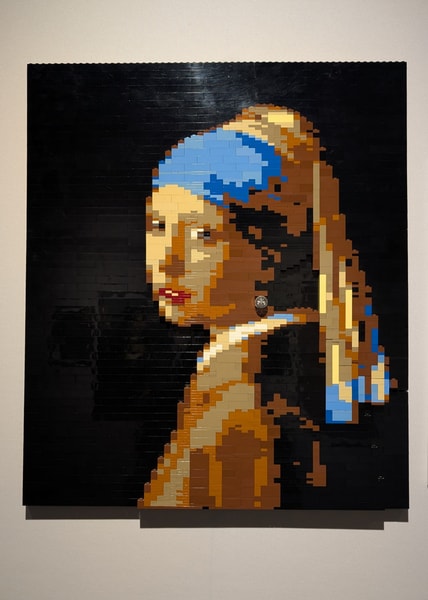
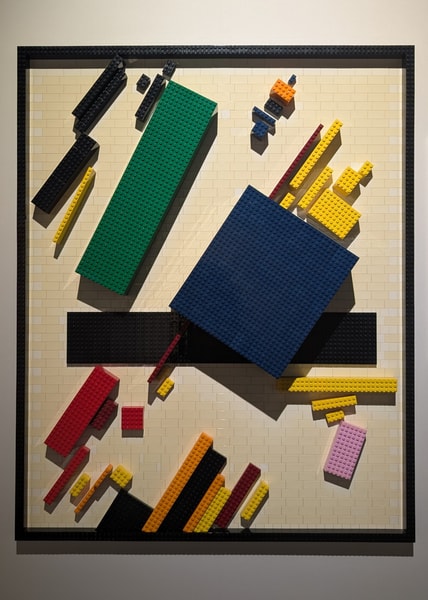
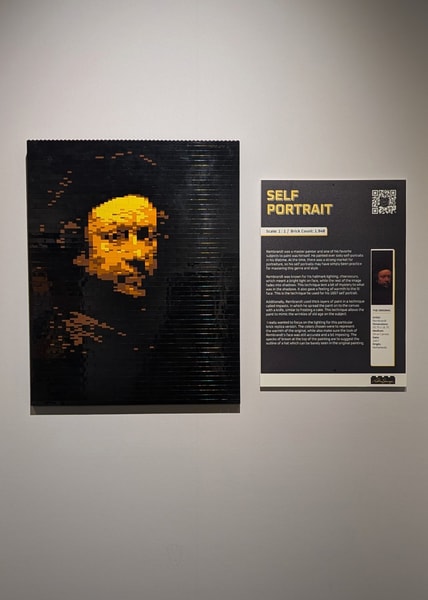
A few weeks ago, I went to The Art of The Brick Exhibit which features works by artist Nathan Sawaya made from LEGO pieces. I was a bit skeptical about whether it would be a waste of money, but it was more enjoyable than I expected. While there were many re-imagined pieces of famous artworks and new sculptural artworks, two of my favourites were Vermeer's Girl with a Pearl Earring and Malevich's Suprematist Composition.
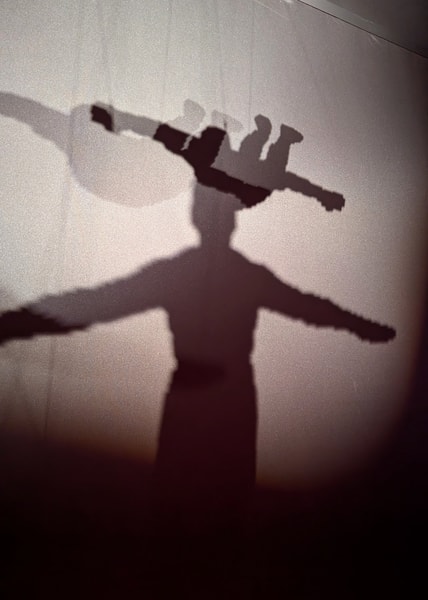
The last photo I included is the shadow from one of the art installations that consisted of figures hanging from the ceiling. I find myself quite drawn to interesting shadows of sculptural art (and plants). Sometimes, they can be just as or more intriguing than the artwork itself.
I also wondered why the camera was able to pick up more of a pixelated image than the eye. When I looked at Rembrandt's Self Portrait, there was barely an impression of a face. But at a distance or through the camera lens, the face was clearly visible. Google says it's because the human eye is an interpreter. It can only see the central area, called the fovea, in high resolution, so it needs to move and scan the area in order to stitch together the image and fill in any gaps. The camera, on the other hand, already has a set of uniform sensors in place to capture the image.
So it seems that the tortured poet is a real phenomenon. For example, my favourite works by Hermann Hesse and Saint-Exupéry are so beautiful written yet have been attributed to the authors’ pain. But I wonder, what is the cause and effect? Is it that the pain of being human is so hauntingly beautiful that we can’t help admiring it? Or is it the vulnerable expression of pain that is so courageously beautiful? Perhaps, from a less masochistic perspective, it is the release of the pain and the healing that comes with it that makes it poignantly beautiful?
Regardless, I want to ask myself more important questions. Is it worth it to purposely seek out pain to create beautiful artwork? And is pain necessary so that such beauty can remain in the world? I don’t think so. Or rather, I hope not. I don’t want to participate in that pattern anymore.
We can create beauty without purposely seeking or creating pain. We will still have the dark amidst the light, decay amidst new growth, and loss amidst the joy. But I believe our ability to work with the tools that create beauty, whether that be language, movement, sounds, or the composition of colours and shapes, can be beautiful in itself. Within our existence is already the seeds of all the beauty we need.
When we are not behaving in alignment with our words then we are the same as artificial intelligence. This intelligence is just an input-output programming of the collective consciousness in auto-pilot form without reflection. When we believe that these thoughts and beliefs and programmed knowledge are who we are, we are playing out the sci-fi horror story of AI becoming independent and taking over the world. It has already happened in the form of our egos.
Artificial intelligence can be a useful tool, even if used merely as a mirror to our own thinking. It is the test that we’ve created for our collective selves to remember our human nature. We can use robots for the activities that we believe to be a chore. We can use robots to help us manage thoughts that are overwhelming. But why would anyone want to believe that the creation of art, including writing, is a chore? If embodying our truth, expressing the gifts of our human talents in the world were a chore, what else would we rather be doing? Making money?
If this is the case, then humanity has come to a crossroads where we must decide whether our sole point of living is just to make money—to gather a humongous security blanket over us to consume and consume more, believing that this can make us feel safe for being alive. But how much is this safety worth? The millions of dollars in a bank account or the billions of debt in the national banks? Or perhaps, the pricelessness of our sacred spiritual existence that took the risk for us to manifest in material form?
Indeed, finding security can be easier than confronting the overwhelming matrix of thoughts that keep us believing that our expressions, our truths, and our unpragmatic creativity aren’t worthy in this world. When we cannot trust our nature, we take away our true power to fight against a false enemy: we fall into the trap of believing that AI can devalue the true value of art. But have you ever believed that artificial flowers can take away the beauty and magic of a living blossom?
There will always be magic in life even when artificial flowers serve their purpose in dark corners. So while I do not dislike AI, I am concerned that we may not pass our test as a species. What would the world then become? But maybe, this test is only for those willing to take it. Everyone else will fall into the background of collective programming until humans are forced into extinction. In the mean time, we commit to our nature; just like how most plants prefer to grow in an abundance of soil and nutrients, there are always those resilient ones that can be found in the cracks of a concrete surface.