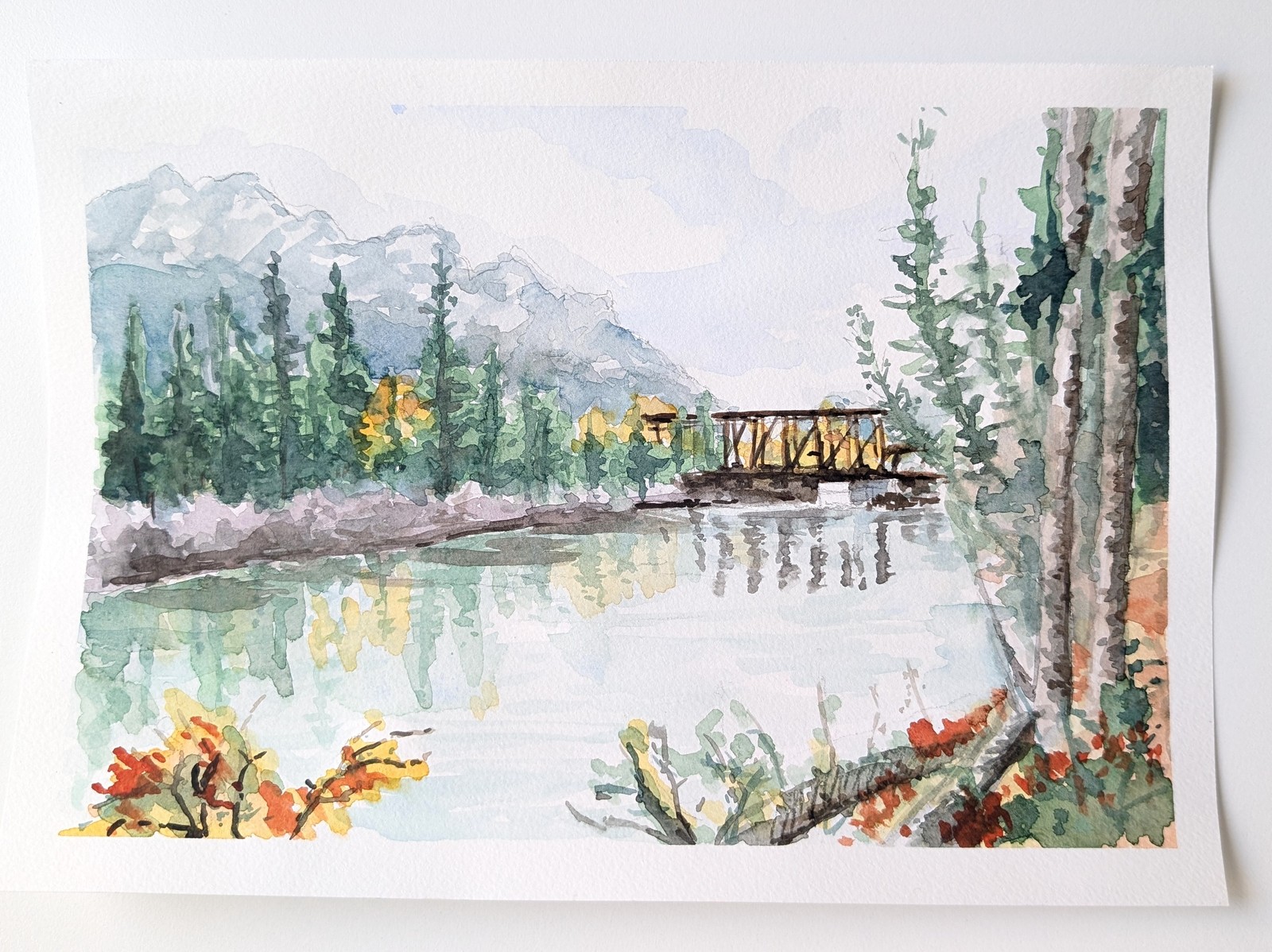
Earlier in the week, I had a bit of a dripping faucet issue, so I used some of the water for a quick watercolour painting. I think my watercolours usually look better in photos than in real life...
Reflections about the liminal space between nature and culture, self and society, humanity and divinity.
© Van Thi Diep, PhD.
Earlier in the week, I had a bit of a dripping faucet issue, so I used some of the water for a quick watercolour painting. I think my watercolours usually look better in photos than in real life...
In forest therapy, we remind participants that the guide is not a therapist—the forest is the therapist. This non-hierarchical aspect of being a guide is what I like about the role. We are equal participants, no more or no less than others in the group. We guide because we have been initiated into the purpose of the gathering.
While I am trained in forest therapy, my scope of work is outside of the forest. The guide archetype and its role within the gathering of humanity is how I see life. Life on Earth is the gathering of souls in the pursuit to remember our shared sacredness, an unconditional state of love that is beyond descriptions and actions. We are all equals regardless of how much money we make, where we were born, the circumstances of our lives, our achievements and our failures.
How the details play out are the illusions, like metaphorically, the fashionable clothing we put on each day, to make living as humans more fun or challenging. The only levels we will find ourselves in is in the mastery of being a spiritual being in human form. Our progress is determined by how far we’ve been initiated into holding pain, seeing beauty, and living from the heart.
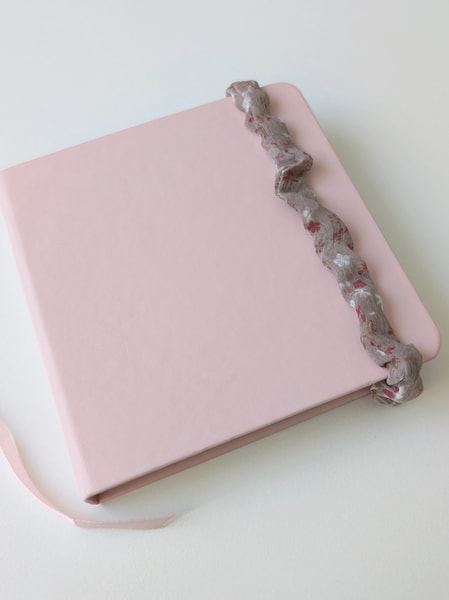
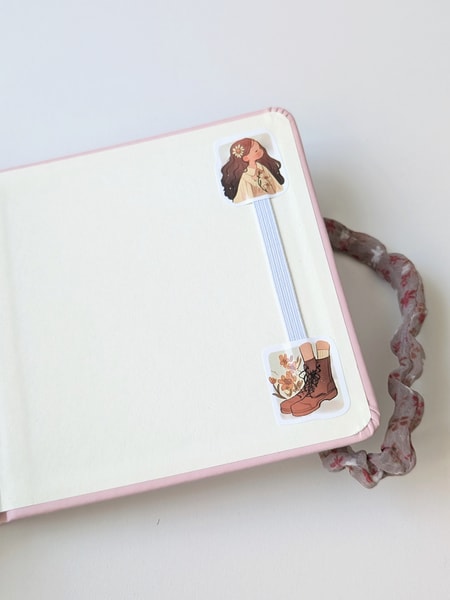
Even though I rarely have the patience to sketch outdoors, the elastic of my Talens sketchbook still managed to get too loose. I was hesitant for a while to cut off the elastic entirely or replace it but I decided to give it a try since I had some thin white elastic at home. But white elastic looked boring with my pink cover. Since I had some leftover matching chiffon fabric, I sewed a scrunchie-like elastic casing for it. Not perfect, but cute.
If anyone is interested in replacing the over-stretched elastic of their sketchbook in a similae way, here's the process:
There is landscape—the metaphysical relationship between our inner and outer place in the manifested world. There is the Earth—the physical manifestation of our groundedness in this world. But what is land?
When I hear people in environmental circles talk about land, I often get the impression that what they really want to talk about is the “Spirit of the Place.” They refer to “The Land” like a metaphysical entity embodied in a forest or a meadow that they go out onto that is separate from the urban environment. Certainly, in many cultures, the land does encompass the Spirit, but for the people I’m referring to, I can intuitively feel their hesitation to acknowledge it. So, in their elusiveness, their land is turned into a semi-mystical concept that is also stripped from its political reality.
But land cannot escape human politics. Not because land is inherently political, but because humans have not learned to not be political. Within the concept of land is both stewardship and governance (i.e. a series of decisions about how we manage community, resources, and the idea of place itself). If we interpret governance as control rather than administrative care, then the land we live on will also become the primary object of control.
Since humans first began to dwell within fixed boundaries, land has been a source of conflict. Embedded in land and politics is the paradox of our deepest collective human trauma—the illusory separation between our spiritual essence and our physical manifestation. As those in the New Age community would say, we are spiritual beings having a human experience. At first, it seems as if there is a duality in this truth (i.e., we are both spiritual beings and human beings), but the two parts cannot be separated. We can only be humans as spiritual beings. The cognitive separation of the two parts is what creates our reluctance to find peace in this world.
While those skeptical of spiritual concepts would like to believe that our discomfort comes from spirituality, it is actually our discomfort with being human that disturbs us. Instead of taking our spiritual nature and applying it to our time here, as a collective, we have been self-sabotaging our way back to a state of non-human spirituality by destroying ourselves or others.
But we have the choice to treat our sojourn here on Earth as a prison that we constantly want to escape from or see it as a mission of spiritual mastery. Our embodiment is the coming together of Heaven and Earth, yin and yang, mind and body, physical and immaterial, to complete the wholeness of the Spirit. We didn’t fall from Heaven onto Earth and we aren’t falling further into Hell. We’ve only been floating all along in placelessness, getting ready to “land” on Earth with the Heaven that remains within us on our journey here.
“The Land” is the home we are finally returning to for the first time here in physical form. How we take care of our existence is how much we value our land. As someone once told me in the words of the Buddhisagar (Ocean of Wisdom), “the pure land is right here.” It isn’t found in the past. It isn’t found after death. It isn’t a heavenly world out-there or a patch of the Earth we desperately need to preserve. It is exactly right here.
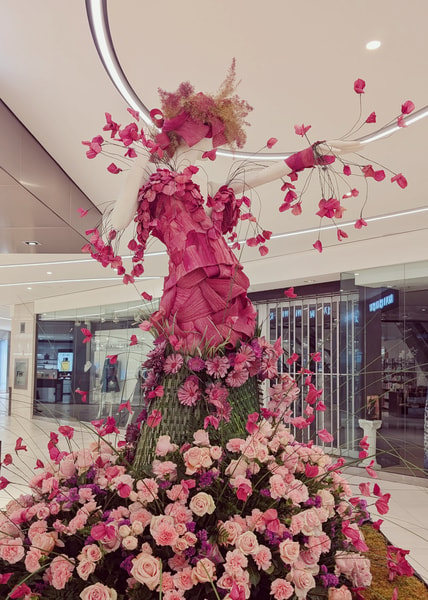

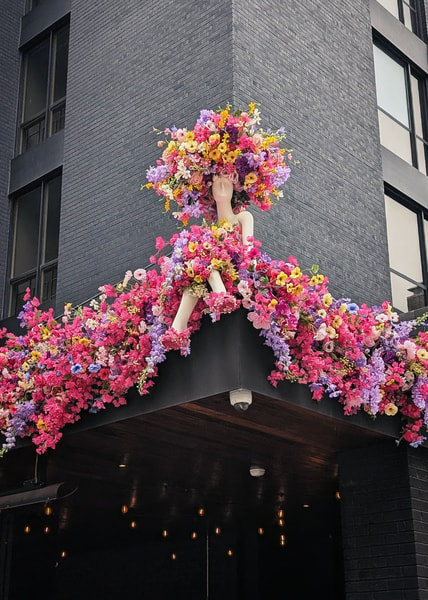
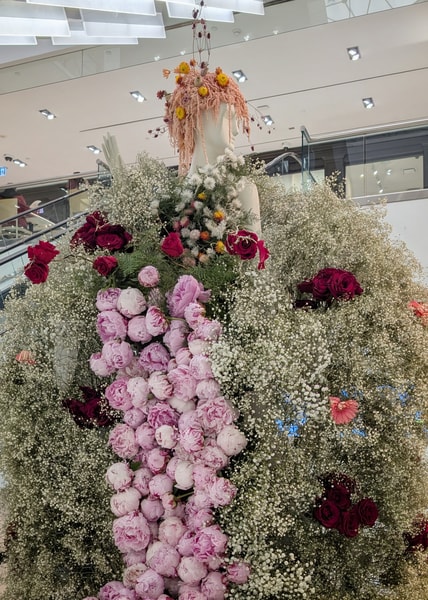
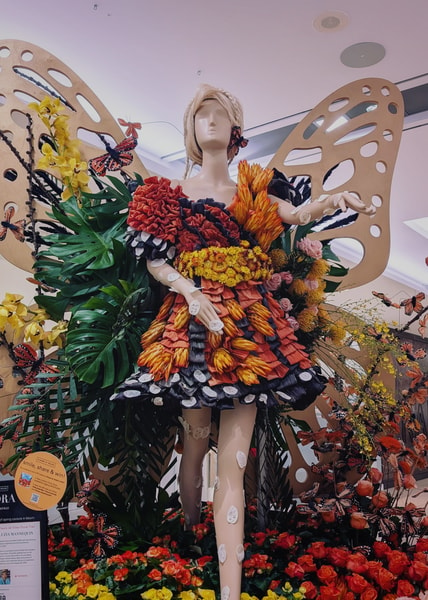
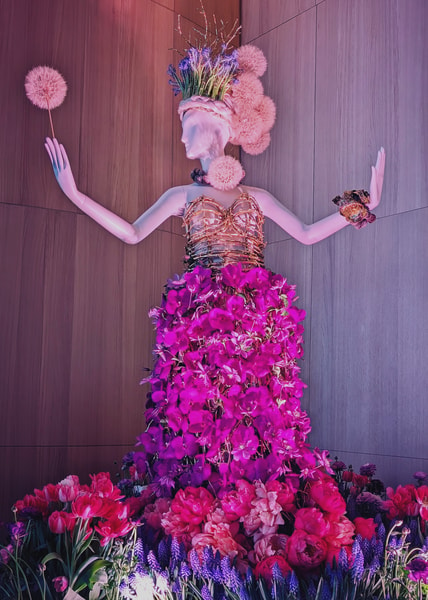
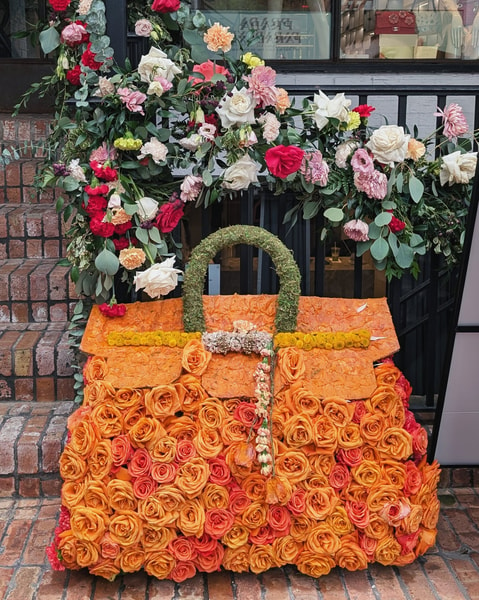
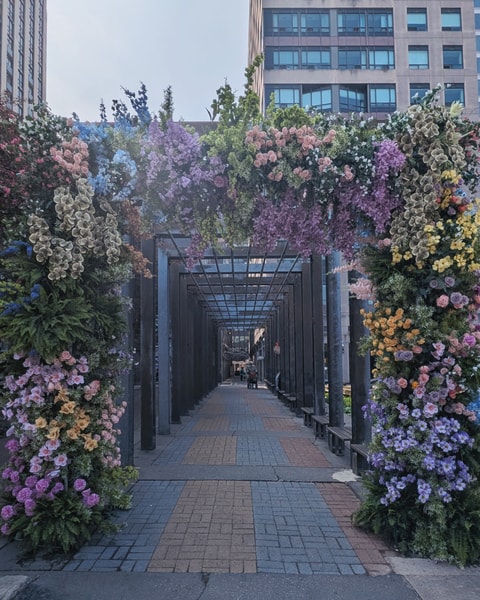
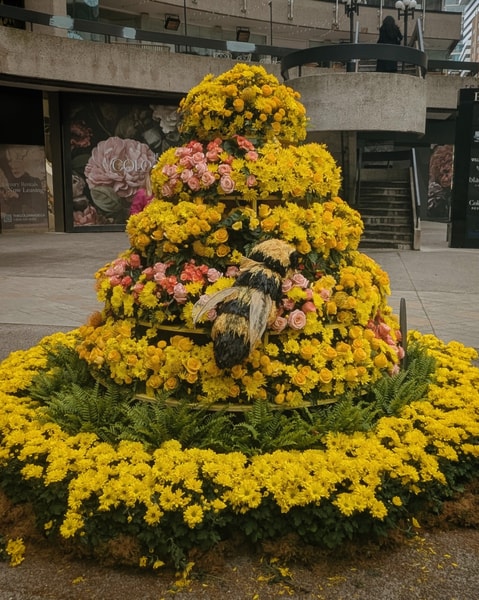
Lots and lots of flowers. These images are from the Fleurs de Villes flower exhibit this past week. It's been around for a few years, but somehow I only knew about it this year. My favourites are the first two mannequins—elegant, seductive, and authoritative—just like how goddesses should be.
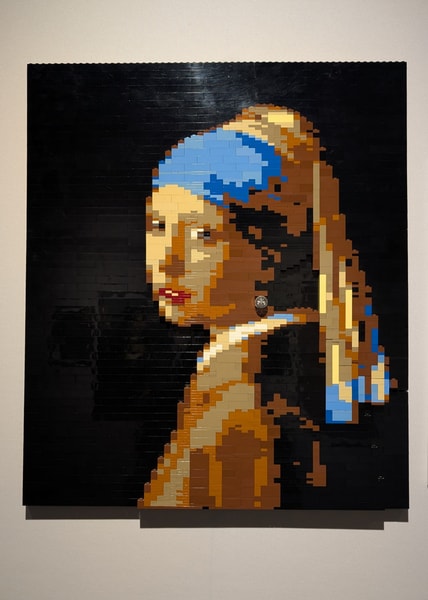
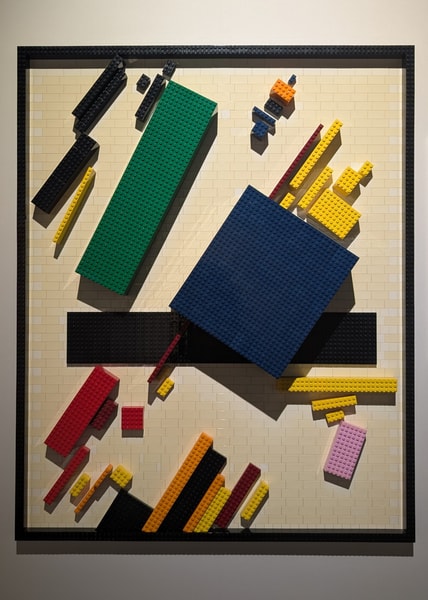
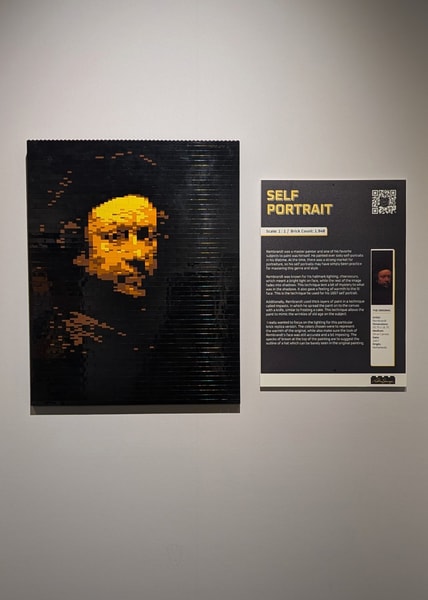
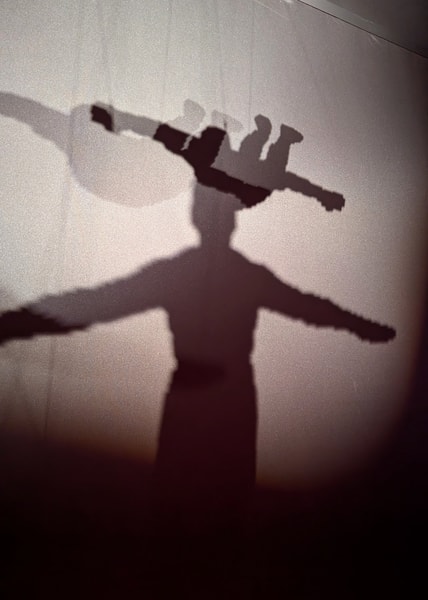
A few weeks ago, I went to The Art of The Brick Exhibit which features works by artist Nathan Sawaya made from LEGO pieces. I was a bit skeptical about whether it would be a waste of money, but it was more enjoyable than I expected. While there were many re-imagined pieces of famous artworks and new sculptural artworks, two of my favourites were Vermeer's Girl with a Pearl Earring and Malevich's Suprematist Composition.
The last photo I included is the shadow from one of the art installations that consisted of figures hanging from the ceiling. I find myself quite drawn to interesting shadows of sculptural art (and plants). Sometimes, they can be just as or more intriguing than the artwork itself.
I also wondered why the camera was able to pick up more of a pixelated image than the eye. When I looked at Rembrandt's Self Portrait, there was barely an impression of a face. But at a distance or through the camera lens, the face was clearly visible. Google says it's because the human eye is an interpreter. It can only see the central area, called the fovea, in high resolution, so it needs to move and scan the area in order to stitch together the image and fill in any gaps. The camera, on the other hand, already has a set of uniform sensors in place to capture the image.
Our willingness to acknowledge our human roles as spiritual beings is collective. Do not worship someone else’s sacredness as a means to forget your own. No person or group is inherently more connected to the earth or to the sky or to the essence of nature than another. That is like saying our feet have a better relationship with Planet Earth than our heads because our feet are physically closer to the ground. Our parts operate as one or else we are incomplete. Yet, each of our existences is already the complete embodiment of divinity.
Behind the mental fallacy that the Earth can be controlled is the coping mechanism of our collective human trauma and our purest spiritual desire. We’ve mistaken the desire to master our belonging on physical Earth as spiritual beings with the false belief that more land ownership—more control of resources, people, and the physical ground beneath us—can lessen the insecurities that come with forgetting that our physical existence is the manifestation of our spiritual essence.
Humans cannot escape the longing for truth. But truth, according to Heidegger, is not found in what is correct but through a process of unconcealing what has been hidden. Accordingly, the ultimate Truth that humanity yearns to unconceal is our existential purpose in the world.
Heidegger’s existential ontology, Dasein (Being), describes an anxious paradox: the awareness of our present existence and its linkage to the world’s past and future circumstances along with the awareness of a possibility for non-existence and non-identity. As Being is nurtured through dwelling in place, human beings naturally desire place and fear placelessness.
But if place is a physical or emotional environment where one can feel belonging and connectedness with other inhabitants, then placelessness is equivalent to the discomfort of not-belonging. Therefore, humanity’s ontological purpose and what we ultimately want to seek through knowledge and ethical choice-making is how to nurture our sense of belonging in the world.
Authentic culturing happens when self-aware and reflexive people engage together in honest and non-judgmental community building. It is life serving and cosmological because culture is humanity’s contribution to the world. We nurture things that grow and construct things that do not grow (Building, Dwelling, Thinking, Heidegger, 1951). Healthy culturing starts with individual choices of integrity and authenticity. A society that has forgotten its true nature will fear authenticity and foster mentalities of separation, scarcity, and unworthiness. A society that remembers that its collective purpose can be built on the value of every citizen’s uniqueness will plant seeds for mindsets and creative endeavours that nurture individual and collective flourishing.
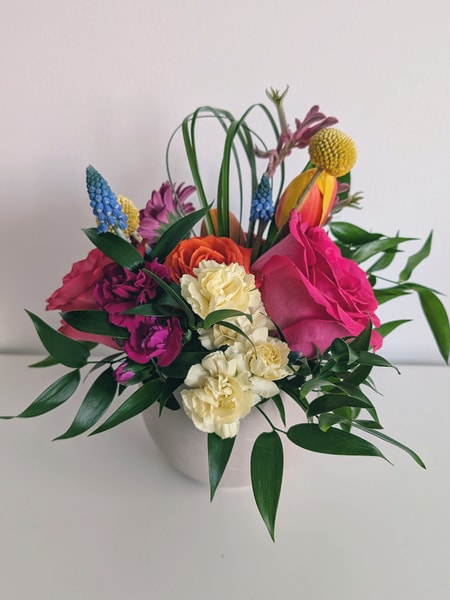
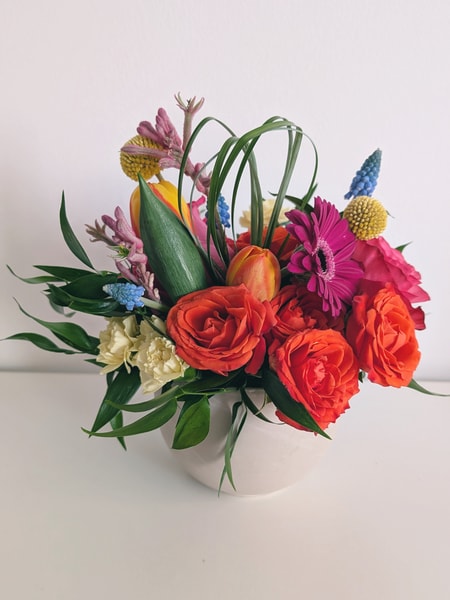
I don't even leave my apartment everyday so I was lucky to see the poster in the elevator and get a spot for a free bouquet workshop at my rental complex yesterday. Of course, the flowers were beautiful and the floral instructor from Make Lemonade was lovely. But there's a dark side too! When I go to workshops, my ego gets worked up. I feel that part of me that is confident in my artistic abilities and my mind judges it as arrogance. I feel that part of me that wants validation but my mind judges it as inadequacy. When I'm making art by myself I know that imperfection is part of the process, but for some reason in a group, I revert back to the shy and awkward child who is afraid to shine and have fun.
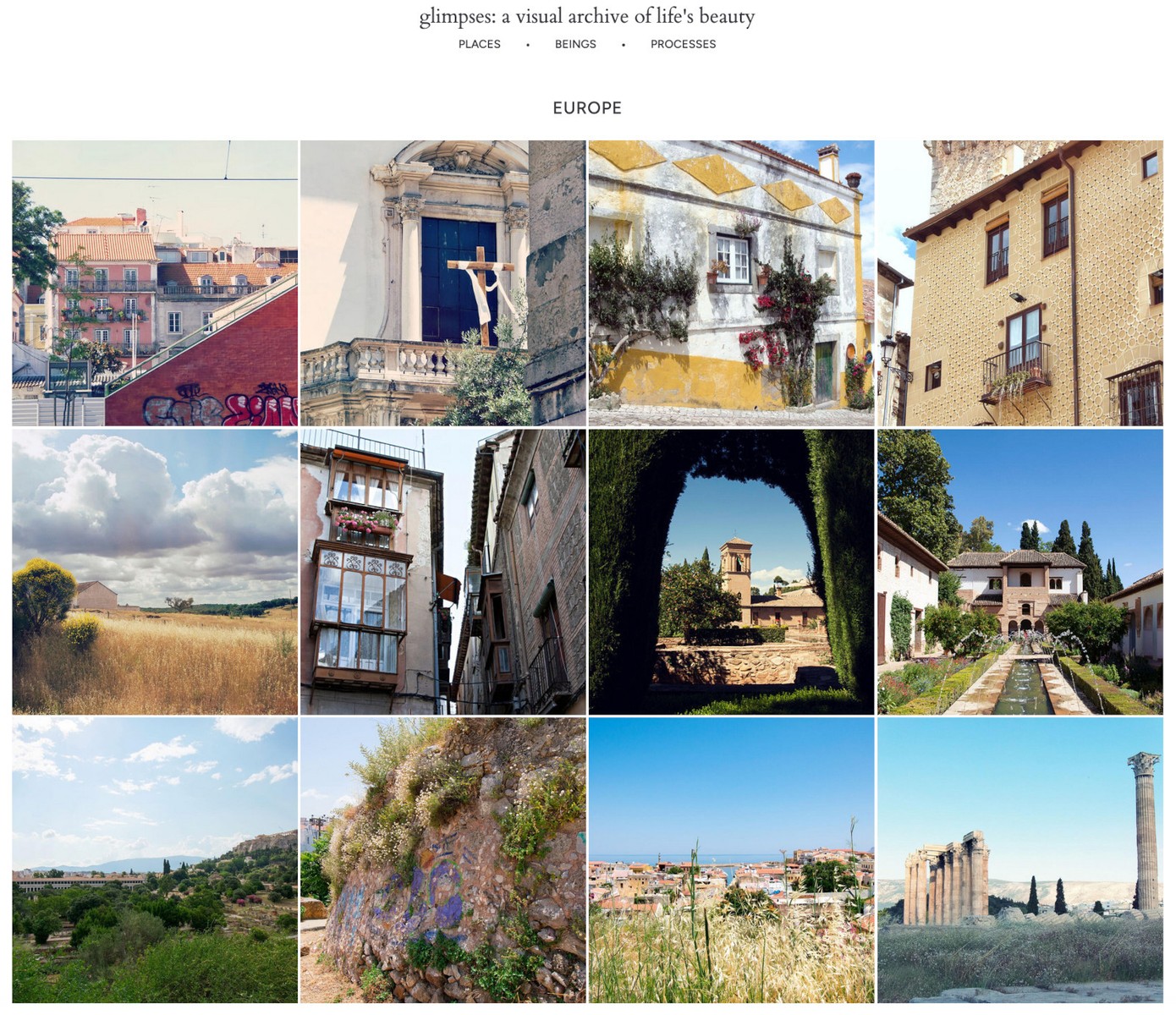
Early last year, I quit Instagram and LinkedIn. It wasn't for political reasons like many others who were leaving IG at that time. I was just uncomfortable with the ingrained inauthenticity that came with those platforms. I didn't have many followers and whether I was right or wrong, I didn't feel like the ones I had were able to see the real me, then or in the future, anyway. To make matters worse, many of them were my former colleagues, so I felt like I was performing a role that I had long since walked away from.
I tried to start fresh on Bluesky and Cara. My follower count never grew, so each post felt like a muffled shout into the void of a busy marketplace. Eventually, I realized that it didn't matter what platform I used. It was the structure of a social media feed that didn't work for me. I wanted to share the things that gave me joy in a pure and heart-felt way but social media was triggering my insecurities and my childhood need for validation. I was probably empathically picking up the energy of others who felt the same way as well. So again, I quit those platforms and decided to make my own image gallery without followers or likes.
It was a complicated quest because I wanted to use the gallery as a portfolio for my creative hobbies but also as a place to share what I found beautiful in the world. My triggered ego would tell me that I was arrogant and was just trying to show off when I wasn't a professional photographer or crafter, but my heart would say that the world's beauty is found outside and inside me. I am the observer and the vessel for the beauty that reaches me and the tools I used did not define the value of that beauty. What helped me through my dissonance was Antoine de Saint-Exupéry's quote that "love does not consist in gazing at each other but in looking outward together in the same direction."
My image gallery is an expression of my love and my search for love. But the true love I seek can only be found when the visitor is ready to see the beauty in me and resonate with the lens of beauty that I use to see the world. Its name, Glimpses: A Visual Archive of Life's Beauty, shows that even though individual glimpses may be brief, many glimpses together make an impression. Similarly, our lives may not be always beautiful, but our existence is always a resonance of divine beauty.
Since the gallery is static, I needed a place to share my ongoing glimpses. It isn't a perfect solution, but I can use this blog for that. The caveat, however, is that I need to integrate my two identities: the me who can step back to write high-level philosophy from the position of an observer of humanity, and the other, the messy, vulnerable me who longs to love and be loved, and like an innocent child, wants to share little moments of beauty and wonder with anyone and everyone. To make this possible, I now have two feeds in the menu (philosophy & glimpses). You can find the high-level me and the grounded me as two separate threads, but together, you will find me in my totality.
How often does one stop to think whether they really want to see every human being as equal no matter the circumstances? How much is this answer influenced by a need to be a good person, whether that be internally, from the projected guilt of others, or externally, as a self-marketing device in a strategic world or a safety net to conform in a judgmental society?
Considering the tragedies in our human history, it would be hard to imagine that many of us (or all of us, for that matter) has the emotional capacity to honestly see this equality. There is only a fine line for the wounded ego between wanting equality for every person and wanting to be the one to control every person as equal subjects under its own authority. But the wounded ego does this only to protect itself from annihilation since true equality has no room for its existence.
So when someone says they want equality, check to see how much they know themselves: how much they know of the pain that they have held onto unknowingly; how much they know of the pain that they have already let go of; how aware they are of the immense difficulty of their fight for equality; and how aware they are of how much they need to surrender to actually find what they are looking for.
This is the second part of a write-up I did on A Course In Miracles in 2024. As much as I resonate with the Course's overall teachings, there are some explanations I prefer to deviate from. This post addresses my thoughts on the absence of the divine feminine figure, the relevance of the body, and the interpretation of magic.
When I first started A Course In Miracles (ACIM), I tried to ignore the fact that every (holy) figure, including the reader, was masculine. Like the language of the Bible, God is our father, we are all brothers, and the Holy Spirit is the He who knows. I searched online for explanations. The consensus I found was that during the time when Jesus was alive, women were not eligible for inheritances. So, to inherit the Kingdom of God, everyone, including women, was all one under the Son of God.
Supposedly, as a woman, I should be grateful for this level of inclusive thinking. But no, I'm not convinced. The book was scribed in the 1970s. By that time, Jesus would've been speaking to a world that had already gone through significant feminist movements. Moreover, there must be a spiritual reason why women have been subjugated in most cultures throughout history in the first place.
With a bit of mental gymnastics, a thought came to mind: Who is it to say that women are a subset of men (as some religious interpretations would have it)? If we take the words literally, we can also think that men are a subset of women since the word "man" is a part of the word "woman". Eventually, I asked myself if l would let my ego be triggered by a three-letter pronoun and denounce the truth of the text. So, I kept on reading.
Still, life has been teaching me to trust my intuition, honour my emotions, and return to my body. The lessons of reclaiming the sacred feminine in me were not going away and that training did not have to conflict with the teachings of the Course. Therefore, I’ve come to believe that the messages in ACIM are meant for the divine masculines within all of us, with Jesus as the teacher and prototype. The Course having been born in a university psychology department fits well with this idea. A place where the thinking mind is allowed to assume that it can know and solve everything, and where blind faith is seen as irrationally foolish, is a good place for a reminder of a greater power beyond the ego.
While ACIM teaches us that we first need to know that we don’t know, the sacred feminine in me has taught me that it’s also ok to know. This revelation first came to me after my PhD defence years ago. While the exam went smoothly for the most part, a bit of tension occurred when the Chair did not agree with the answer I gave to one of her questions. But instead of agreeing to disagree, I was subtly “put in my place” as the examinee (and not a peer). To add salt to injury, the external examiner reminded me in a motherly tone near the end that “it’s ok to not know.”
I passed the defence with an award nomination, but that seemingly small event of friction shook my soul. It was only after a few days of sitting with discomfort that I realized what my higher self was trying to tell me: It’s ok to know; it's ok to have my own interpretation of the world. In other words, my personal truth and the universal truths that I intuitively know, just because I know, are valid.
For me, the most disappointing thing from this story was that my truth was undermined by women. But this is not surprising. The voice of the sacred feminine has been discredited in many ways: in and beyond traditional social justice narratives, in events in my own life similar to this one that left me feeling patronized, in the depreciation of Mother Earth’s power through an environmental narrative that relegates her as a damsel who needs saving, and in how esoteric knowledge, which was historically practiced by women, have been witch-hunted and, in ways, continues to be dismissed in institutions. Yet, many of these forms of knowledge have found mass popularity in the New Age movement.
So, I have a feeling that in the 1970s, the rift between men and women, and the archetypal masculine and feminine, were too far apart that our collective spiritual growth had to remain polarized and separate. But something in the air feels different. The evolution of humanity has reached a point where the sacred feminine is ready to return to our consciousness.
While Mother Earth is the feminine embodiment of our planetary home, our bodies are the physical homes that give space to our life experiences. However, ACIM reminds us that we are not our bodies. Moreover, the body is what gives us the illusion that we are separate. Although this teaching is true because we are indeed consciousness, the body is also the only place where we can experience the oneness of our conscious presence.
Of course, you can always argue that because oneness is the natural state of the universe, the illusion of separation, and therefore, our bodies and our egos are fundamentally spiritual errors. But if that is so, and we can live peacefully in an unmanifested state of oneness, why would any spiritual entity want to incarnate as a human being? Why would we want to be here in a world of timelines, narratives, and bodies?
Perhaps, the opposition we see between our spiritual existence and our corporeality as living beings is the actual illusion of separation? Perhaps, this illusion is what has been causing our pathology of placelessness as a species? Perhaps, our inability to reconcile these two realities is what drives us (now and in the past) to settle for hastier routes to oneness through death, violence, and destruction? ACIM notes that the ego wants to kill us, but maybe the ego isn’t really a villain and is merely an ineffective advisor who tries to sell us lazy short-cuts to our goals?
Somewhere along the path of my healing, I realized that we are here to bring Heaven to Earth. We are here to learn to live with time and narratives, through our bodies, in a state of unity. At this time in history, this “we” may only include those who feel called to take on the role of a lightworker, but ultimately, this “we” will become our collective destiny and purpose as human beings.
But before we can feel the bliss of Heaven, whatever Hell on Earth that has been created so far, repressed and locked in our bodies must be freed and expressed, not through violence or projection, but through radical truth and acceptance. So, ultimately, we cannot deny the value of our bodies if we want to be awakened. Rather, the body is our key to returning to our spiritual home on Earth.
ACIM states, “Miracles fall like drops healing rain from Heaven on a dry and dusty world, where starved and thirsty creatures come to die.” At first, I thought it was ironic that such miracles from the Kingdom of Heaven would come from a mind that would see our world as dry and dusty, that death is pitiful, and that our existence in physical form is pointless. But now I see another interpretation: those who see life on Earth in such ways are actually the ones in dire need of miracles. In the image of rain drops nourishing the earth, I can't help but think of the magic of a forest. So, the last topic I want to address is the interpretation of magic and miracles.
ACIM uses these two terms very specifically and differently from how we normally use them. Magic, as referenced in the Course, is related to the psychological condition of magical thinking—the error of a causal link between unrelated events. However, in ACIM, this magical thinking applies to all cause and effect between the world and the mind. A miracle is the realization that this cause and effect is just an illusion because the world is always a creation of the mind. The error in believing that the mind can go outside of itself to fix itself and to fix the world, and vice versa, that the external world has power over us, hinders our access to forgiveness (atonement) and universal love.
This all makes sense to me conceptually, but what I find tricky with ACIM and many other spiritual teachings is the challenge to get past the “mind’s” conditioning of language. Spiritual truth then often becomes a circular reference that many “minds” cannot decipher (e.g., "Form is emptiness; emptiness is form," from the Heart Sutra). So before we can even unravel our attachments to particular definitions of magic, we have to contend with the word “mind.”
The creative mind in ACIM (and the one used in the law of attraction) isn’t the thinking mind. The error in believing so, with the Cartesian foundation of “I think, therefore, I am,” has set us off on a destructive trajectory since The Age of (Philosophical) Enlightenment. Rather, this creative mind refers to the Dreamer—the mind that dreams the world into being through ethereally connected and separate bodies of spiritual existence. The physical laws, scientific conclusions, and social norms we operate from are the world-building rules we’ve set up for this dream.
While I can get behind ACIM’s description of the error in our universal magical thinking, the dreamer in me prefers to safeguard our Earthly definition of magic because it gives us room for the rules of our dream world (i.e., our perceptive reality) to change. We can say that surrendering to the Holy Instant and allowing miracles does exactly that, but my surrendering to the grace of miracles requires a certain kind of magic. This magic is the nourishment my Inner Child needs to remain innocent in the face of the ego’s temptations to persuade her that she is guilty.
The magic of the Innocent Child is grounded through Heaven on Earth. Nurtured by the Earth Mother, this magic is fertile. It reminds us that life is a miracle in itself. Contrarily, death also supports life. A dead tree is habitat for many organisms. Animals also sustain life by consuming what has already died. So, we don’t need to condemn anyone or start a war to return to oneness. We are complete in our existence exactly as we are, right here, right now. Because life and death already exist, oneness is already here.
I felt like this was a good time to bring back a couple of posts I wrote on A Course in Miracles in 2024 on my old blog. This is the first one, which summarizes a few of the key lessons.
A Course in Miracles (ACIM) had been on my radar ever since I first read listened to Marianne Williamson’s A Return to Love: Reflections on the Principles of ‘A Course in Miracles.’ At that time and the years after, I had no desire to check out the original source, but as the saying goes, when the student is ready, the teacher will appear. Perhaps I was desperate for miracles to happen because after I had watched one of Eckhart Tolle’s YouTube videos on ACIM, I was intuitively called to get a copy of the book and embark on the Course.
I would describe ACIM as a “New Age Bible.” Channelled and recorded word-by-word by Columbia University psychology professor Helen Schucman between 1965 and 1972, with the help of her colleague William Thetford, the Course is taught by a narrator Schucman recognized as Jesus. For me, knowing that this mystic information was born in an academic setting was already a miracle since I had been frustrated with academia’s reluctance to embrace spirituality. I had been increasingly intuiting the operations of guilt in institutions and I had started to use the term "the innocence of knowledge" without fully knowing why. But after reading ACIM, many of my obscure philosophies began to make more sense.
I have yet to master my miracle-working abilities, but I was surprised that many of the Course's teachings were lessons that I had been working through in such abstract forms that my mind didn’t even fully understand. In this post, I’ll share core lessons of the Course that resonated with me and in the next post, I'll write about some diversions I have with the material.
ACIM teaches us that souls are given authorship from God (or whatever name you want to call the ultimate divine power). To deny otherwise is to choose the ego as the authority which comes with all the errors in our perceptions of the world. This lesson certainly triggers my ego who wants to believe that I can change myself all by myself and change the world with me. Despite often forgetting the futility of this error, I have learned through experience to know the importance of this humbling lesson.
The ego is the result of the illusion of separation. The ego creates judgement and attacks others (or themselves) with it to maintain this separation. Those who do not attack are the ego’s enemies because they have a better chance of letting it go. Therefore, to release guilt is to release the ego. To the ego, the guiltless are guilty. If you pay attention, you may be surprised at how often you do something (or not do something) to avoid guilt. You'd also notice how much our society operates through guilt.
Forgiveness is to correct the ego’s errors. The power within forgiveness is that it requires divine intervention. We can’t will our way into forgiving. We can only allow it to happen by temporarily suspending the ego's stories. The Course calls this the Holy Instant when we surrender the projection of guilt to the Holy Spirit. In simple terms, it means surrendering our attachment to the pain caused by judgment to a larger universal power in a moment of complete presence.
In ACIM, the Last Judgment is God’s final verdict of our holiness, which is always a positive verdict when we surrender. However, the practical me likes to think of the Last Judgment as the last judgment that the ego gets to make before it dies! According to the Course, behind a person’s actions is only one of two operations: to love or to call for love. When we come against attacks, it means it’s time for less judgment, more surrendering, and more loving (even if the recipient is only ourselves).
As I’ve been tricked by my ego many times, I like to keep this reminder close at bay: if we are frustrated by someone else’s identification with their ego, that is, their attachment to guilt, fear, projection, and attack, then it is because we have not completely forgiven ourselves.
A while back, I wrote a blog article exploring why academia is a disempowering place despite the notion that knowledge is power. After studying ACIM, I have an even clearer understanding of why. It is because our guilt-based world has inverted the truth about knowledge.
We seek knowledge, usually through empirical means, to convince ourselves that what we know is certain. But the reality is all that we seek to know is just a matter of perception. According to ACIM, knowledge is always true and truth does not need to be proven. Since the opposite of guilt is innocence (in the rulings of the court), true knowledge that is ego-less (and therefore, guilt-free) is always innocent.
In ACIM, we are simultaneously students and teachers. Since our perception has not reached the level of truth, we come closer to knowledge through experience. We teach by example and simultaneously learn by living and teaching what we want to acquire. As the Course notes, “To have peace, teach peace to learn it.”
Another way I interpret this is through Heidegger's explanation of truth being a process of unconcealing. As human beings, we forget the spiritual truth we "know" when we are "thrown into" the world, so we embark on a journey of unconcealing the layers that veil the essence of our Being.
ACIM explains that to share suffering is to follow the ego’s path of separation. Joining another in suffering creates a special relationship that separates itself from the whole. This strengthens the ego and makes the past real as the shared unit attacks "others" in their weakness. True empathy, on the other hand, strengthens the empathizer and the collective whole (because we are one of the same). This empathy does not judge through the ego, and therefore, is an invitation made by Spirit to respond to a situation in a certain way.
As an empath, this lesson is encouraging but challenging. In a world of injustice, it's difficult to choose to stand in the awareness that "sovereignty" is more loving and empowering than "solidarity." Not only do we feel the pain, we are constantly asked to join in the suffering to prove our empathy or else risk being attacked with the sufferer's projected guilt. But this is the test of our knowledge: we know we are guilt-free and our act of service will manifest in our lives when we surrender.
On April 8, 2024, I had plans to see the Great North American Eclipse with a friend in the Hamilton area. Just as I was making my way onto the packed commuter train from Toronto, my friend texted me to ask if I wanted to abort mission because of the heavy clouds. I texted back to say that I wanted to take the chance. When I reached our meet up location, the sky was still completely overcast. Yet, something in me knew that we were going to see the eclipse (even if my mind couldn’t predict the future).
I didn’t tell my friend about my intuitive premonition, but I told her that I had recently finished reading ACIM and there was no order of difficulty in miracles. Low and behold, by the time we reached our destination, a place serendipitously called Groundhog Hill, the sky had completely cleared up and we were able to see our shadows under a sun that was beginning to be eclipsed by the moon.
I love the memory of this story because it is fuel for the dreamer in me. It reminds that there is really no miracle too large to witness. If the clouds can be moved out of the way for us to witness the miracle of a cosmic event, who is to say that a stubborn mind cannot be budged, or a locked-up heart cannot be freed? As ACIM says, “all expressions of love are maximal...There is no order of difficulty among miracles.”
Religion is the logos of our human society. They show us, through what we worship, judge, and maintain in our actions and systems, how we feel about ourselves.
Greek gods were flawed. They were patriarchal (despite the existence of many goddesses), spiteful, and full of jealousy, but they also personified the dynamics of nature. They represented our vices and revealed that these flaws are also part of our divinity. The bad lives alongside the good as what is sacred and natural. These Gods were not idols; they are us in archetypal forms.
On the other hand, monotheistic religions such as Christianity, mirror our seeking and subconscious realization that there is a universal God more powerful than each of us separately. Yet, humans have misinterpreted this existential oneness, this omnipresent power, as an exclusivity belonging to a belief system that needs subscription.
While Eastern philosophy and earth-based spiritual traditions also bring their own logos, more or less intact in their original interpretations, humans have still found ways to make these cosmological narratives about exclusivity to mental beliefs, behavioural actions, and personal or collective identities.
Nowadays, science, economics, and politics have become alternative religions. They are the predominant logos of our modern world. No longer trusting in Heaven or Earth, we see ourselves as the sole providers of our truth and safety. Without something greater to hold us together, what else can we do but think that life is everyone for themselves?
Is this a pitiful trajectory for our search for God or a victorious discovery that we can be our own Gods? The answer is not black or white because the greatest misinterpretation of who we are, which has led us to this point, is to believe that Heaven and Earth are a dichotomy.